

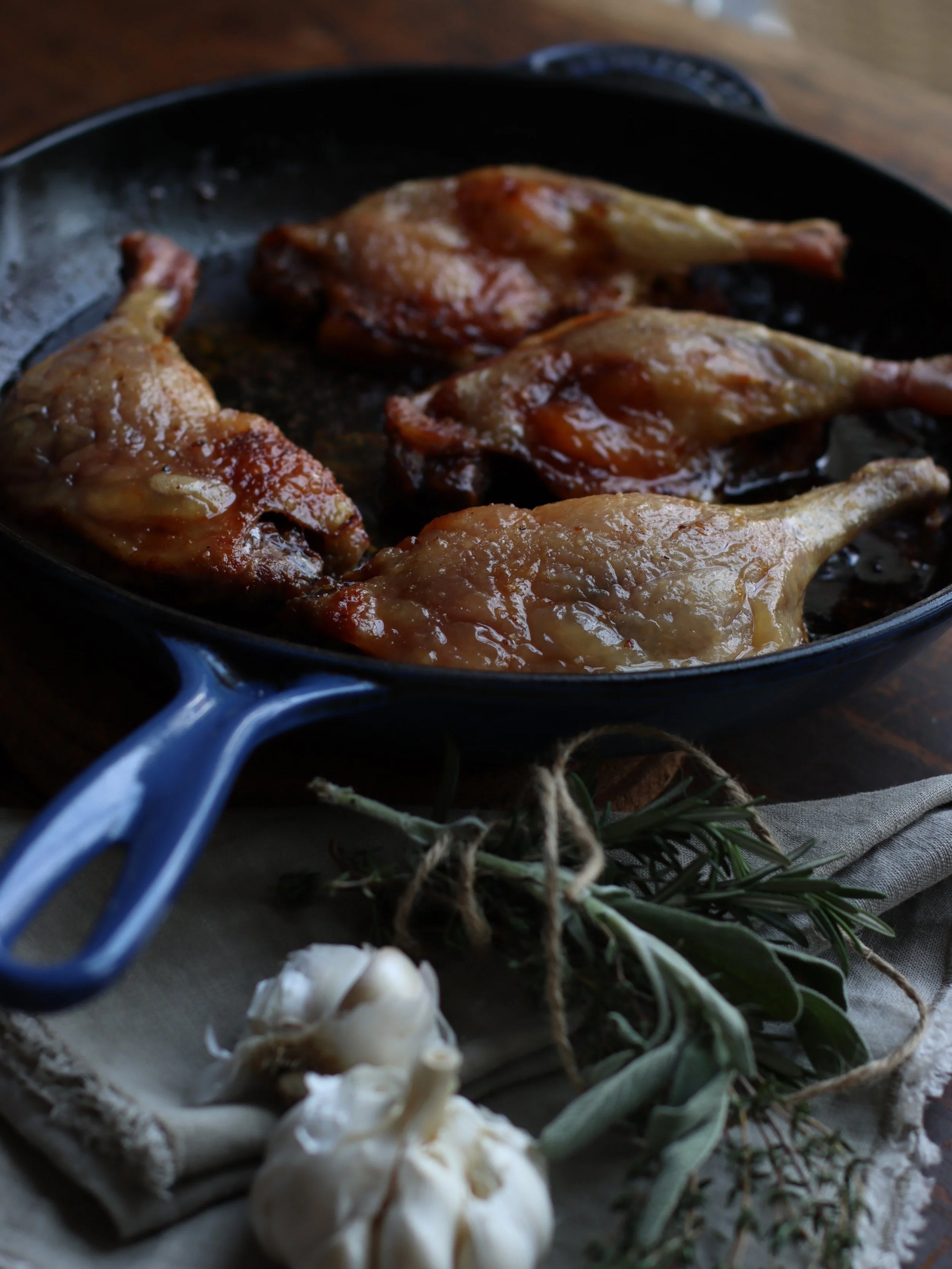
I personally think that being on a GAPS/SCD diet should also emphasize highly nutritious foods. So, instead of just leaving out refined sugar, white flour, and starchy foods, I prefer to focus on high-quality meats, eggs, and dairy, as well as wild-caught seafood like fish, clams, and mussels. Free-range is also preferred over grass-fed or grain-fed livestock because of its overall higher nutritional value. I also buy certified organic foods whenever possible to avoid synthetic fertilizers and pesticides, which can add to the body’s toxic load. I think eating a wide variety of whole foods ensures that our bodies get a diverse spectrum of essential nutrients.
Whenever I can find organic duck, I love it to replace chicken for a change. Duck is richer in essential nutrients and vitamins. Its iron level is four times higher than chicken's and is much easier to absorb than plant-based iron. Duck fat is also packed with monounsaturated fatty acids, which are highly beneficial for heart health. There are many more reasons why eating duck meat can benefit your overall health over time—and besides all that, it is delicious!
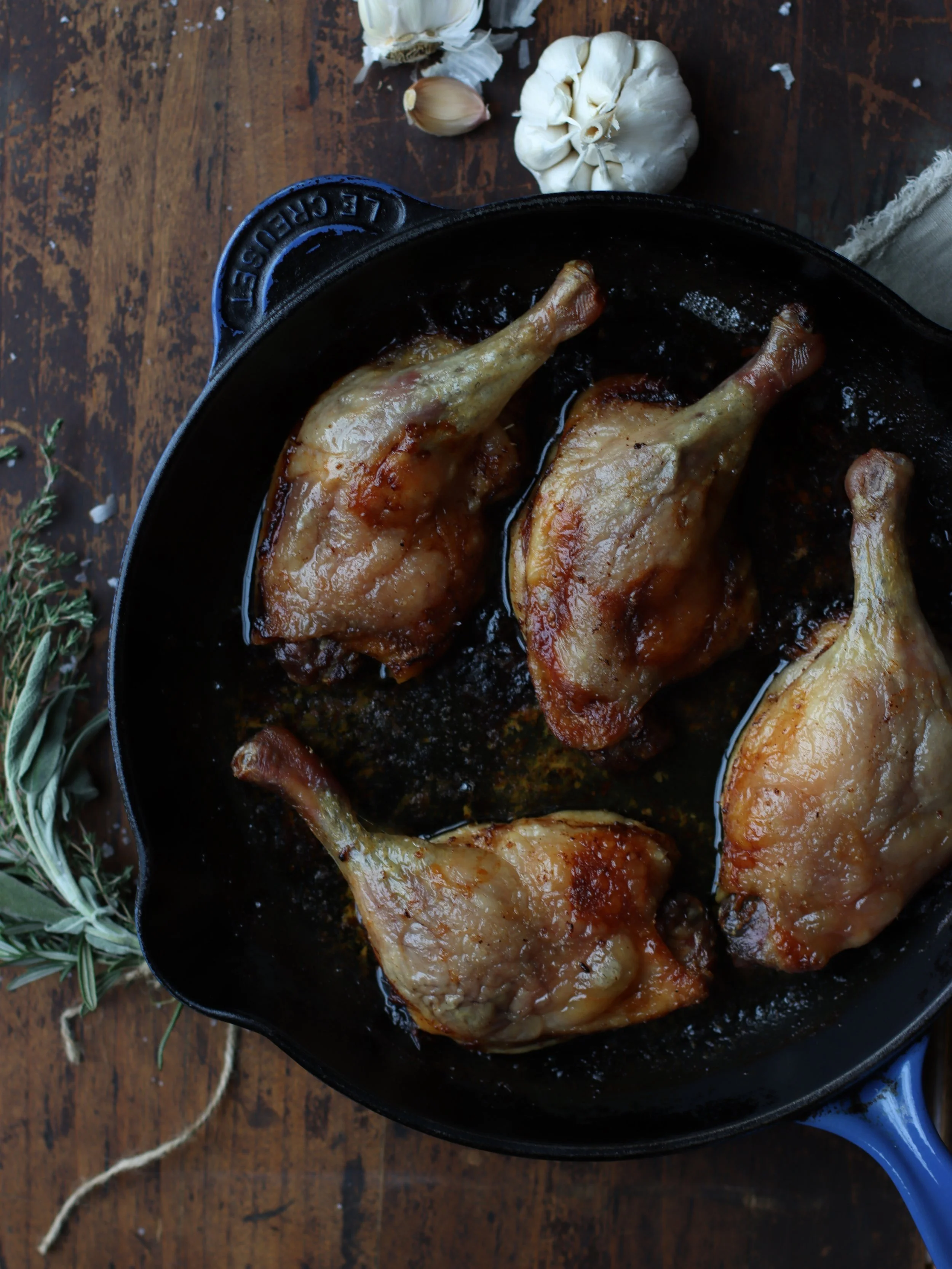
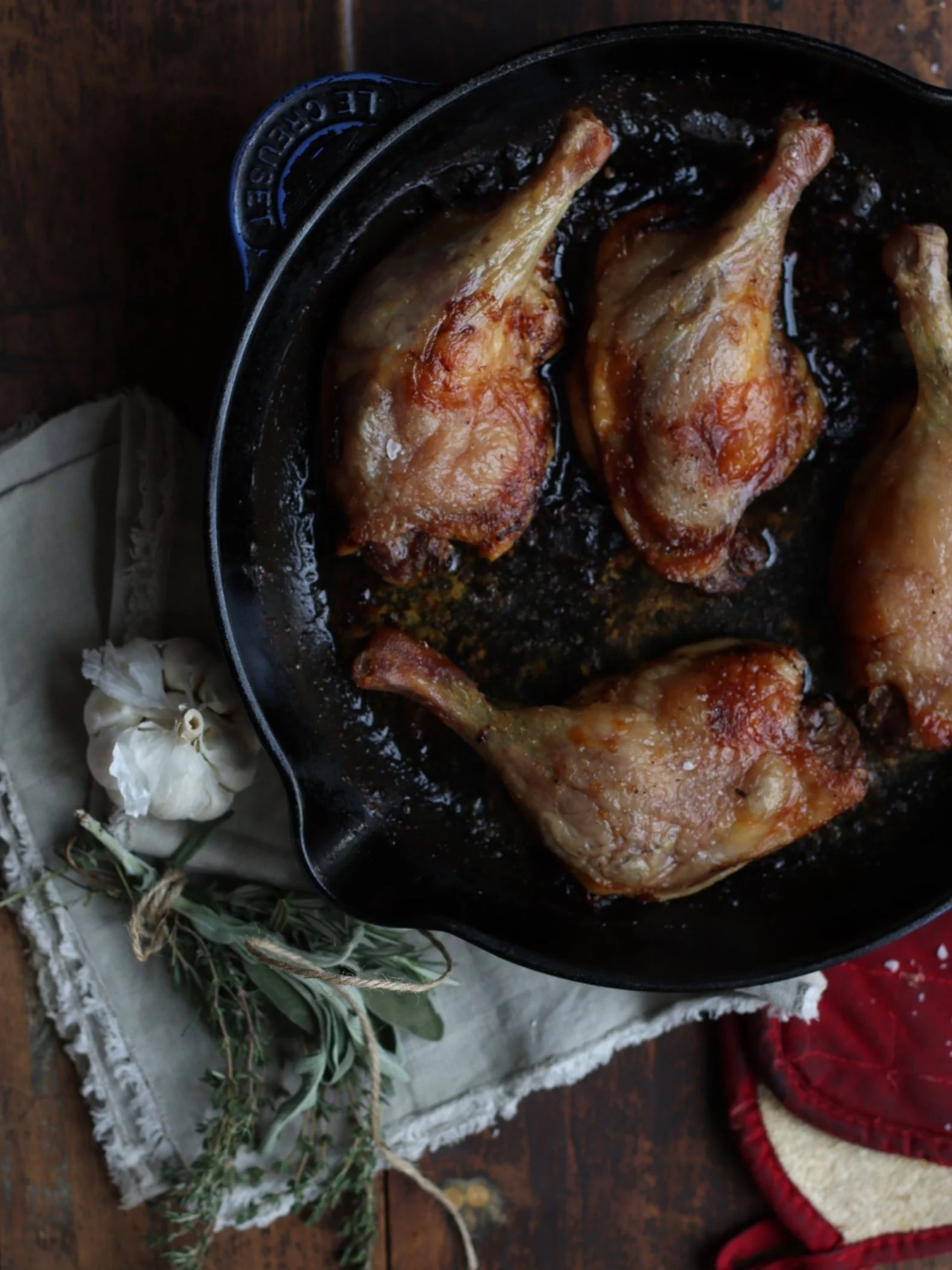
Cooking duck doesn’t need to be complicated. This simple recipe delivers all the health benefits without taking up your entire afternoon. Just place the duck legs in a pan, season them, add plenty of butter, and let the oven do the rest.
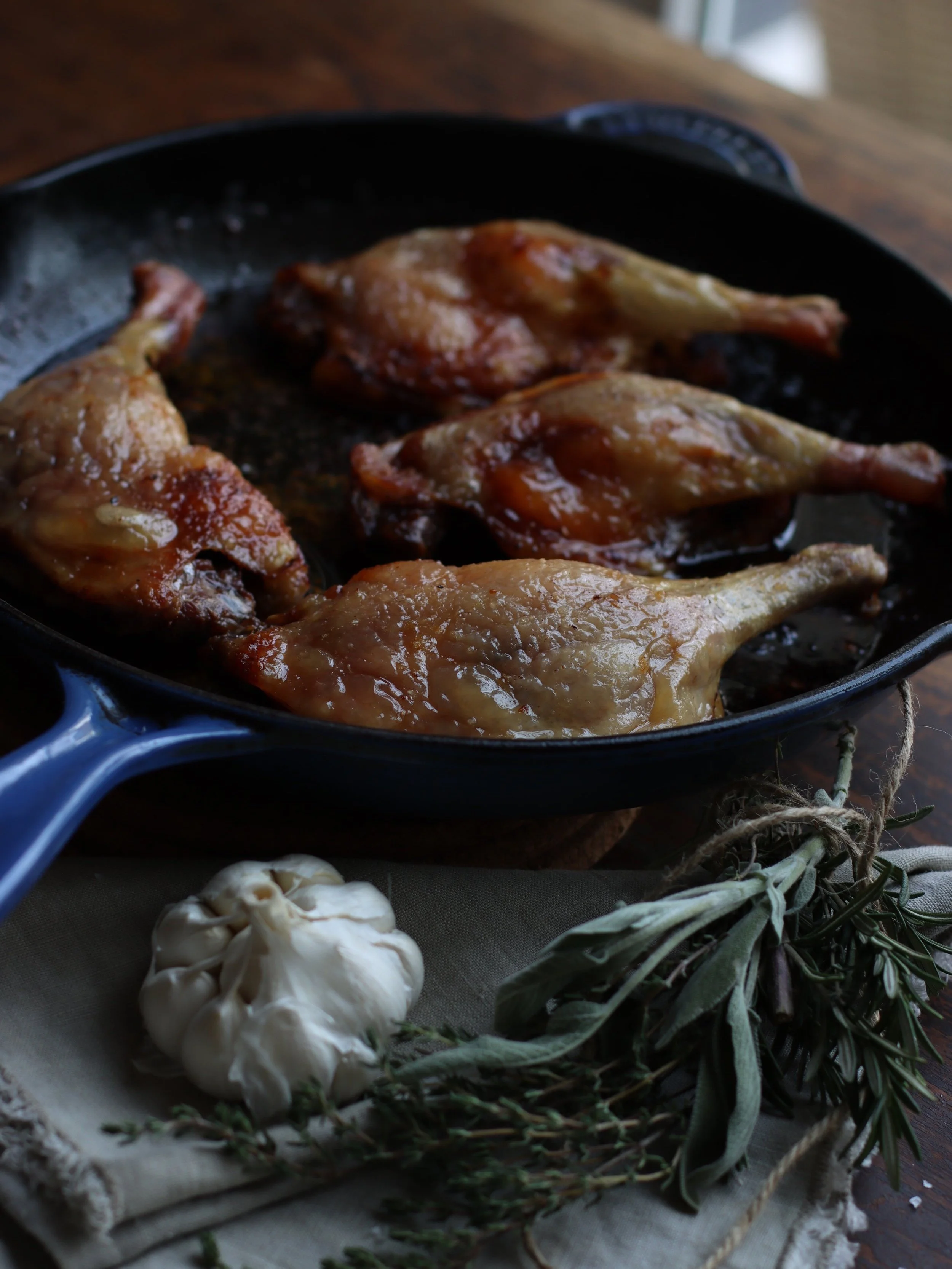
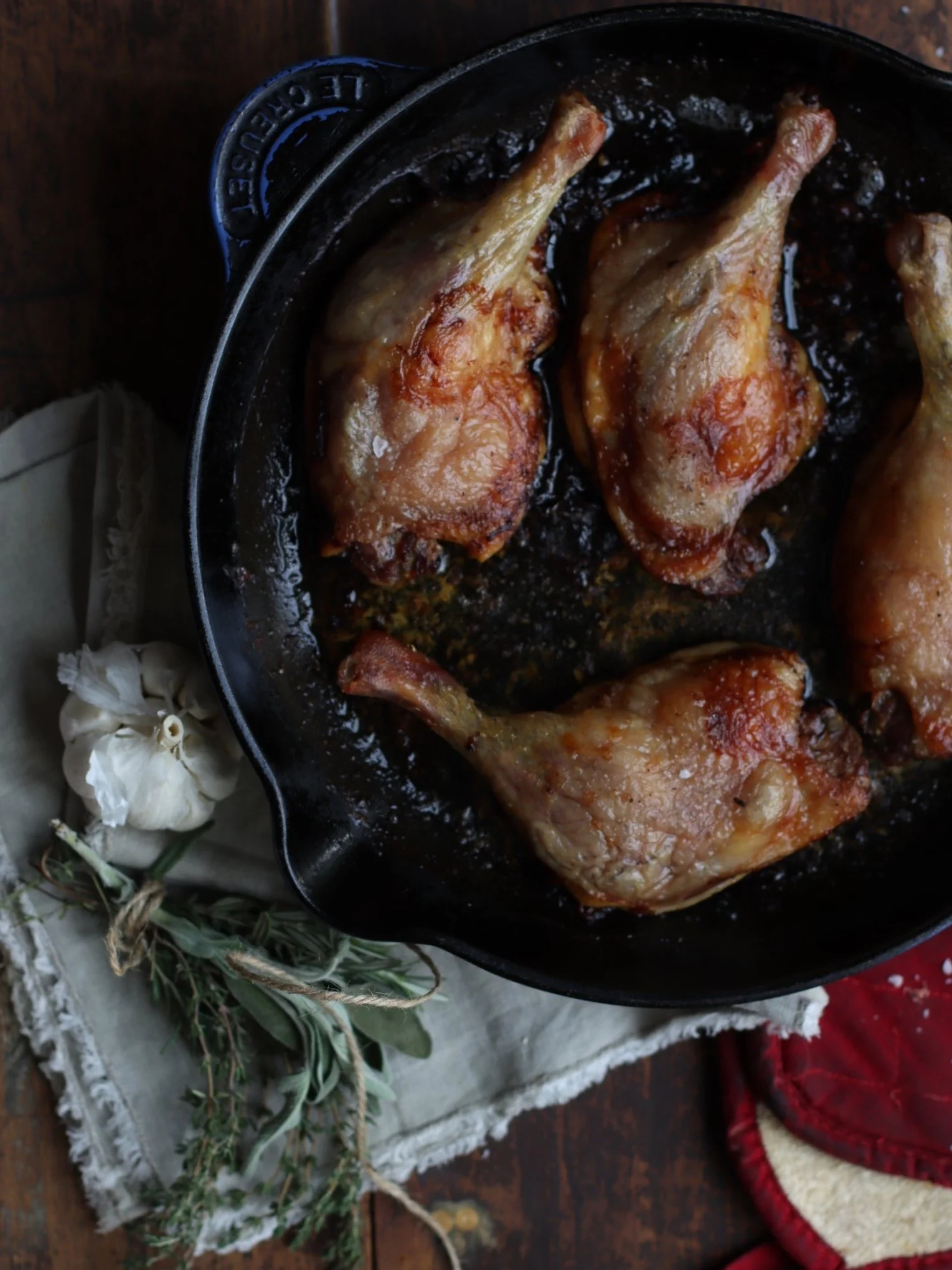
Believe me, these duck legs turn out crispy, super yummy, and entirely kid-friendly!
Guten Appetit!
RECIPE
INGREDIENTS
6 duck legs
sea salt
plenty of duck fat, butter or lard
INSTRUCTIONS
Prep the duck: Pat the duck legs dry with a paper towel. Prick the skin all over with a needle or sharp knife so the fat can render out, being careful not to pierce the meat.
Season and rest: Salt the duck legs generously. Place them skin-side up in a deep, oven-safe dish in a single layer. Arrange them snugly next to each other without leaving too much empty space in between. Let them sit at room temperature for 40 minutes.
Add the fat: Add duck fat, butter, or lard to the dish so it generously covers the bottom. Adjust the amount depending on how fatty your duck legs are—the goal is for the legs to be submerged in at least 1 inch of fat as they cook.
Slow-bake: Place the dish into a cold oven, then set the temperature to 300° F. Bake for 90 minutes.
Crisp the skin: After 90 minutes, check on the duck. Once the skin starts turning crispy, increase the oven temperature to 375° F and bake for another 15 minutes.
Rest and serve: When the duck legs are crispy and light golden brown, remove the dish from the oven and let them cool for 15 minutes before serving (be very careful when handling the pan of hot fat).
Storage Tip: You can strain the leftover fat through a clean kitchen towel and store it in a lidded glass jar in the refrigerator. It will keep for a long time and works great for cooking and frying!
These duck legs taste great on their own but can also be paired with red cabbage, sautéed brussels sprouts with bacon, or a autumn pear stilton salad as well as Belgian endive salad with apples and lemon dressing.
MY LATEST RECIPES






Welcome to CREATING HEALTHY TIMES!
My name is Ulrike. I created this website to share my dietary approach to natural healing and delicious sugar, grain, and lactose-free recipes. I found that, provided with the right nutrition, the body itself is one of the greatest healers.
Find out what I learned on my nine-year journey with the Specific Carbohydrate Diet, and get valuable information about natural healing
ABOUT ME
Try my delicious sugar, grain, and lactose-free recipes
RECIPES